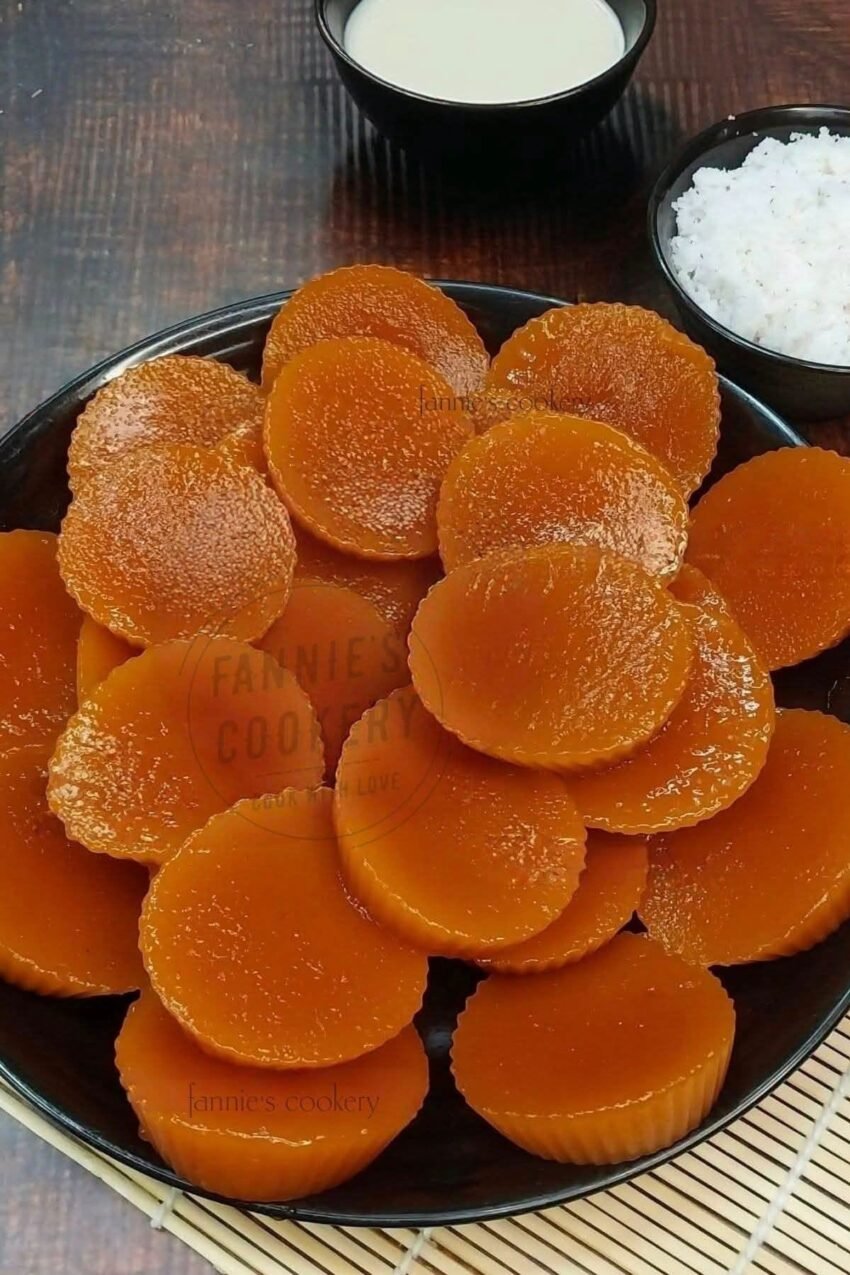
Soft Kutsinta (Filipino Steamed Rice Cake)
The secret to the soft texture is adjusting the ratio of rice flour to all-purpose flour, plus using a bit of fine tapioca starch for that signature glossy, silky finish. These little saucer-shaped cakes are steamed until translucent and shiny, then served with freshly grated coconut. They’re naturally gluten-free (if omitting wheat flour) and vegan-friendly.
Ingredients (Makes about 15-18 pieces using small molds)
-
1 cup (160g) rice flour
-
¼ cup (30g) all-purpose flour (this softens the chew; use fine tapioca starch for gluten-free)
-
½ cup (65g) dark brown sugar or muscovado sugar (for deep color and molasses flavor)
-
1 ½ cups (355ml) warm water
-
1 teaspoon lye water (lihiya) (this is essential for the texture and slight spring; see note)
-
1 teaspoon annatto powder (achuete) or a few drops of orange food coloring, dissolved in 1 tablespoon warm water (for the classic golden-brown color)
-
1 teaspoon vanilla extract (optional, adds a subtle warmth)
For the Topping:
-
1 cup freshly grated mature coconut (niyog) or frozen grated coconut, thawed
-
Pinch of salt (for the coconut)
Special Equipment:
-
Kutsinta molds (mini bundt-style or simple shallow silicone cupcake molds)
-
A steamer large enough to hold the molds
Instructions
-
Prepare the Steamer and Molds: Fill your steamer with water and bring it to a rolling boil over high heat. Lightly grease the inside of each mold with a neutral oil or non-stick spray—this is crucial for clean release. Arrange the molds in a steamer basket, ensuring they sit flat and level.
-
Make the Batter: In a large bowl, sift together the rice flour and all-purpose flour (or tapioca starch). Add the brown sugar. Pour in the warm water gradually while whisking continuously to prevent lumps. Whisk until the sugar is fully dissolved and the batter is completely smooth with no visible streaks of flour.
-
Add Color and Flavor: Stir in the lye water, the dissolved annatto powder or food coloring, and the vanilla extract. Whisk vigorously for another minute. The batter should be thin, like crepe batter or heavy cream. Let it rest for 10 minutes at room temperature. This hydrates the flours and improves the final texture.
-
Fill the Molds: Give the batter one final whisk. Carefully pour the batter into the greased molds, filling each one about ¾ full. Don’t overfill; the cakes won’t rise significantly, but they need a little room.
-
Steam the Kutsinta: Place the filled molds in the steamer basket. Cover the steamer lid with a clean kitchen towel to absorb condensation and prevent water from dripping onto the cakes—this is vital for a smooth, dimple-free top. Steam over medium-high heat for 20-25 minutes. The kutsinta are done when they are set, shiny, and slightly translucent. A toothpick inserted in the center should come out clean.
-
Cool and Unmold: Carefully remove the molds from the steamer and let them cool completely on a wire rack. The cakes will firm up as they cool. To unmold, run a small knife or spatula gently around the edge and pop them out. They should release easily, revealing their signature fluted shape.
-
Serve: Mix the freshly grated coconut with a tiny pinch of salt. Pile a generous spoonful on top of each soft kutsinta or serve it on the side. These are best enjoyed at room temperature on the day they’re made, but they can be stored in an airtight container in the refrigerator for a day. Steam them briefly to soften again before serving.
A Note on Lye Water (Lihiya): Lye water is alkaline and gives kutsinta its characteristic bouncy yet tender texture and helps develop the rich color. It’s a standard ingredient in Filipino baking, available in Filipino grocery stores or online. If you cannot find it, you can use a food-grade lye water substitute or a very small pinch of baking soda dissolved in water, though the texture will differ slightly. Never skip the greasing step, especially if not using lye water.
Let me know if you’d like a recipe for Puto (steamed rice muffins) to pair with these for a classic Filipino merienda platter!