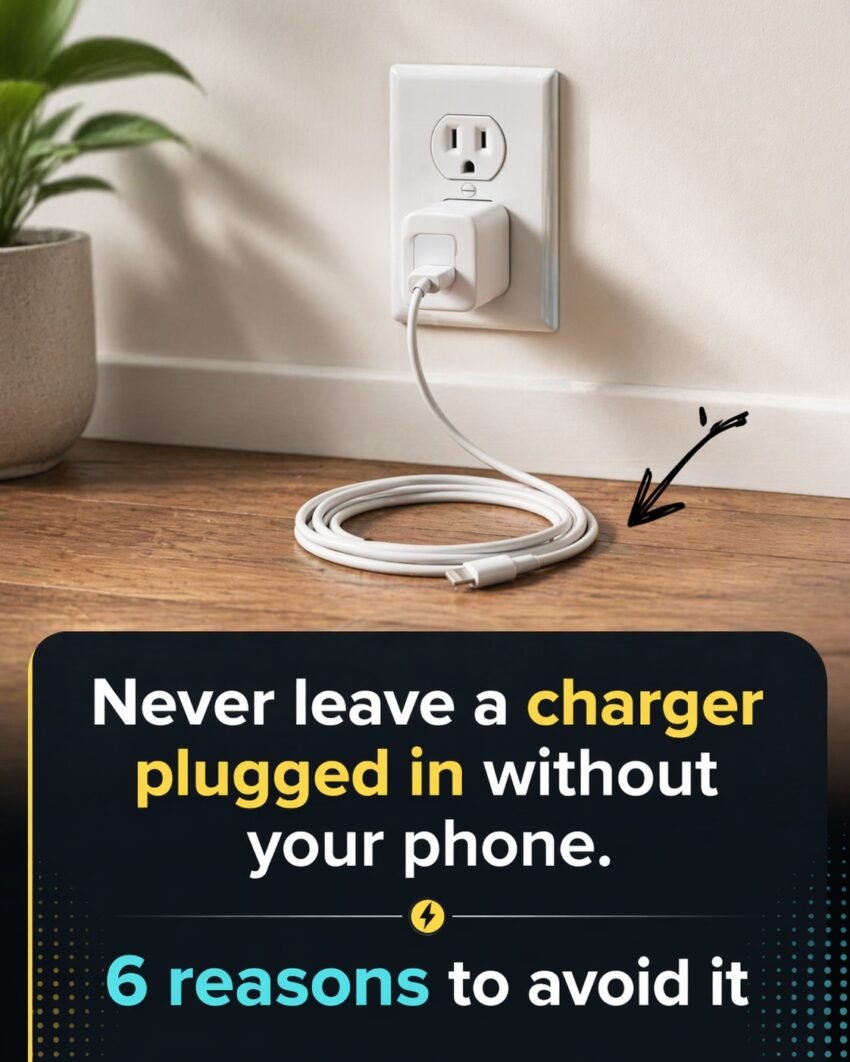
⚡ Why You Shouldn’t Leave a Charger Plugged In Without a Device
Many of us are guilty of leaving phone chargers plugged into outlets 24/7. While that small block seems harmless, there are several practical reasons—from safety to energy savings—to unplug it when not in use.
Here are the top 6 reasons why it’s a good habit to remove your charger from the outlet.
1. It Still Consumes a Small Amount of Electricity (Vampire Power)
-
The Science: Even when not connected to a phone, the charger’s internal circuits are live, converting AC power to DC power. This consumes a small amount of “standby power” or “phantom load.”
-
The Real Cost: A single charger uses a negligible amount (about 0.1–0.5 watts). However, if you have multiple chargers (phone, laptop, tablet, smartwatch) across multiple homes, the cumulative cost can add up to $5–$15 per year.
-
The Bottom Line: It’s not a huge expense, but it’s a simple way to save a little energy with zero effort.
2. Reduces Fire Risk, Especially from Cheap or Damaged Chargers
-
The Risk: Low-quality, counterfeit, or old chargers have poor internal components. Leaving them plugged in generates continuous heat, which over time can degrade insulation, cause a short circuit, or even start a fire.
-
Real-World Incidents: There are documented cases of fires caused by phone chargers left plugged in, especially when covered by bedding, placed on flammable surfaces, or used with damaged cords.
-
The Safer Approach: Unplugging eliminates any risk of heat buildup or electrical fault while you’re away or asleep.
3. Exposes the Charger to Power Surges
-
The Risk: Lightning strikes, grid switching, or faulty appliances can send a power surge through your home’s wiring. A plugged-in charger (even without a phone) can be damaged by the surge.
-
The Cost: Replacing a fried charger costs money. Unplugging it is free.
-
Bonus: Using a quality surge protector for your electronics is a wise investment.
4. Prolongs the Lifespan of the Charger
-
How Components Age: The internal capacitors and transformers in a charger experience wear over time due to heat. Leaving it plugged in keeps it constantly warm, which can shorten its operational life.
-
The Effect: You may have to purchase replacement chargers more frequently. Unplugging when not needed can add months or years to a charger’s life.
5. Prevents Damage to Your Phone (Heat & Overcharging)
-
The Issue: This is less about the charger and more about the phone. Leaving a phone plugged in after it reaches 100% is not harmful with modern chargers (they stop sending current), but the converter inside the charger still generates heat.
-
Heat is the Enemy: Excess heat degrades lithium-ion batteries over time. Unplugging both the phone and charger reduces unnecessary heat exposure.
-
Better Practice: Charge your phone to 80–90% during the day for optimal battery lifespan, then unplug both.
6. Eliminates the Risk of Electric Shock (Especially with Children or Pets)
-
The Risk: A plugged-in charger with a loose, partially pulled-out prong can expose live metal parts. A child inserting a metal object or a pet chewing on the cord could receive a shock.
-
The Reality: Properly functioning chargers with intact cords are safe. But unplugging removes even the smallest possibility of accidental contact.
📋 Summary: Good Habits to Adopt
-
Unplug chargers when not in use, especially overnight or when leaving the house.
-
Inspect cords regularly for fraying, exposed wires, or bent prongs — replace damaged chargers immediately.
-
Use a power strip with an on/off switch for multiple devices; switch it off when not charging.
-
Never cover a plugged-in charger with blankets, pillows, or clothing where heat can build up.
🔌 When Is It Safe to Leave a Charger Plugged In?
-
High-quality, brand-name chargers (Apple, Samsung, Anker, Belkin) from reputable sources have robust safety features and lower fire risk.
-
In a home with modern electrical wiring and no small children or pets.
✅ The Bottom Line
Leaving a charger plugged in without a phone isn’t a major danger with high-quality chargers. However, it’s still a small waste of energy, a minor fire risk multiplier, and unnecessary wear on your equipment. Developing the simple habit of unplugging costs nothing and is good practice for home safety and efficiency.