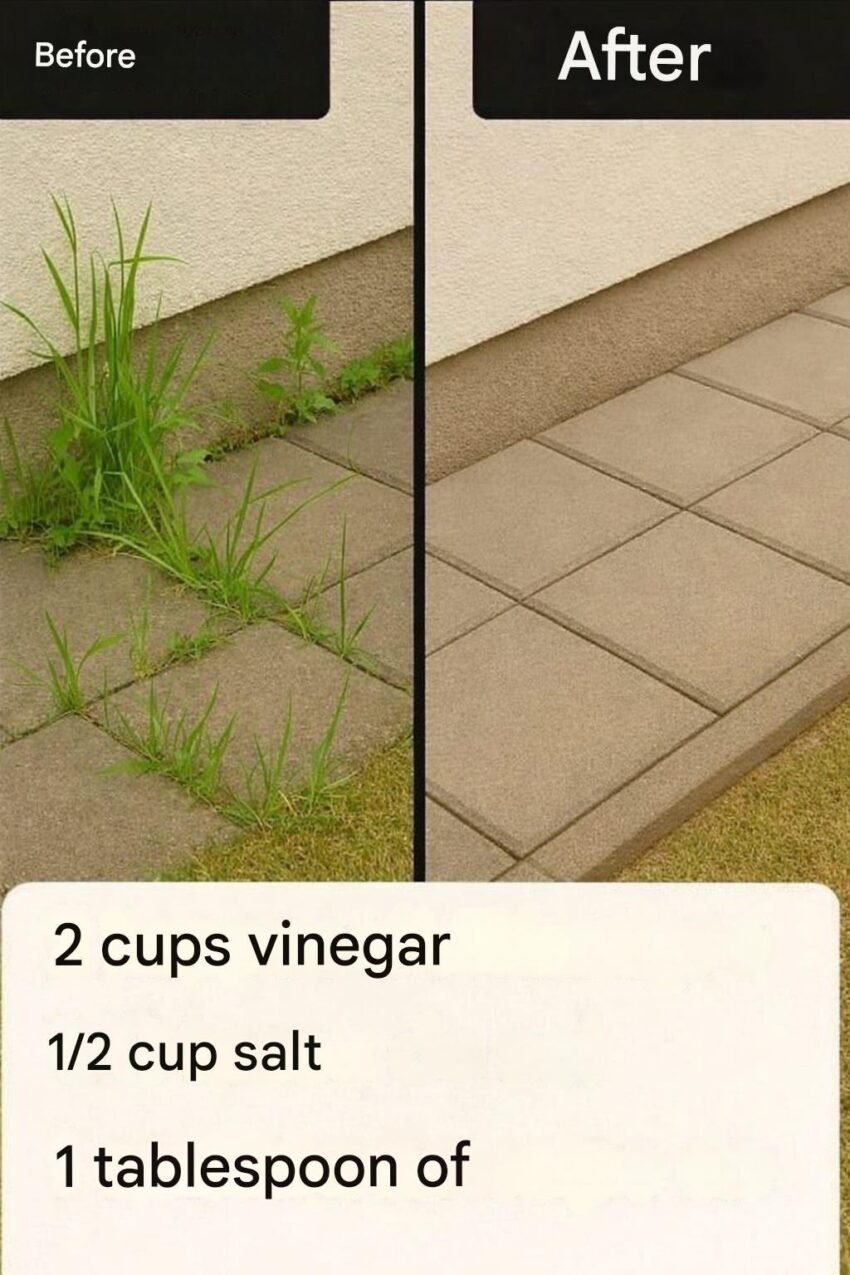
🌿 Homemade Herbicides: Do They Work?
Yes, several common household ingredients can effectively kill weeds — especially young, tender weeds. However, they are generally less potent than commercial herbicides and may require multiple applications.
Below are the best DIY herbicide recipes, ranked from most to least effective.
🧪 Recipe 1: Vinegar + Salt + Dish Soap (The Most Popular)
This is the most effective homemade option for driveway cracks, patios, and walkways. Use with extreme caution — it will sterilize soil for months.
Ingredients:
-
1 gallon white distilled vinegar (10–20% acetic acid is best; household vinegar is only 5%)
-
1 cup table salt (sodium chloride)
-
1 tbsp liquid dish soap (Dawn or similar — acts as a surfactant to help the mixture stick)
Instructions:
-
Heat the vinegar in a large pot until warm (not boiling). This helps dissolve the salt.
-
Stir in the salt until completely dissolved.
-
Add the dish soap and stir gently.
-
Pour into a spray bottle or garden sprayer.
-
Spray directly onto weed leaves on a sunny, dry day. Avoid contact with desirable plants.
How it works:
-
Vinegar (acetic acid) draws moisture out of the plant, causing it to dry out.
-
Salt dehydrates the plant and makes the soil inhospitable for future growth.
-
Soap helps the solution adhere to waxy weed leaves.
💡 Pros & Cons:
| Pros | Cons |
|---|---|
| Inexpensive | Kills everything it touches |
| Fast-acting (see results in hours) | Contains salt — will stay in soil for months |
| No toxic residues (aside from salt) | Household vinegar (5%) is weak; need higher strength for perennial weeds |
⚠️ Do NOT use in garden beds, lawns, or anywhere you want plants to grow. The salt will leach into soil and prevent regrowth for up to 6 months.
🧂 Recipe 2: High-Strength Vinegar Only (Safer for Garden Paths)
Use this lower-impact version for areas where you may want to replant later — but still be cautious.
Ingredients:
-
1 gallon 20% horticultural vinegar (available at garden centers; not household vinegar)
-
1 tbsp liquid dish soap
Instructions:
-
Combine vinegar and soap in a sprayer.
-
Spray directly onto weed leaves.
-
Reapply on consecutive sunny days for stubborn weeds.
Why higher strength matters:
-
Household vinegar (5%) works on young annual weeds but struggles with established, deep-rooted perennials.
-
20% vinegar is much more effective but more hazardous — wear gloves, eyewear, and avoid inhaling mist.
🍊 Recipe 3: Clove or Citrus Oil Herbicide (Plant-Based, Fast-Acting)
Essential oils can be effective, especially for young weeds.
Ingredients:
-
1 quart water
-
10 drops clove essential oil or citrus oil (d-limonene)
-
1 tbsp liquid dish soap
Instructions:
-
Combine all ingredients in a spray bottle.
-
Shake well before each use.
-
Spray thoroughly onto weed leaves.
How it works:
-
Clove oil contains eugenol, which destroys plant cell membranes.
-
Citrus oil (d-limonene) dissolves the waxy coating on leaves, causing rapid dehydration.
Effectiveness:
Works best on young, small weeds. Larger weeds may need multiple applications.
💧 Recipe 4: Boiling Water (Simplest, Safest Method)
Zero chemicals, zero cost, zero soil damage. This is often the best choice for driveways and patios.
Instructions:
-
Boil a pot of water.
-
Carefully pour directly onto the center of weeds.
-
Repeat every 2–3 days for tough weeds.
Pros:
-
Instantly kills leaves and roots of small weeds.
-
No toxic residue.
-
Safe around children and pets when handled carefully.
Cons:
-
Can dangerous if splashed.
-
Less effective on large, deep-rooted weeds.
🔥 Recipe 5: Salt Only (For Permanent Weed Prevention)
Use only where you never want plants to grow again (gravel driveways, between paving stones).
Instructions:
-
Dissolve 1 cup salt in 2 cups hot water.
-
Pour or spray directly onto weeds and soil crevices.
-
Repeat every few months, or after heavy rain.
⚠️ Warning: Salt makes soil sterile. Rain will spread it to adjacent areas. Do not use near flower beds, lawns, or edible gardens.
📋 How to Choose the Right Recipe
| Location | Best Herbicide | Reason |
|---|---|---|
| Cracks in driveway/patio | Vinegar + salt + soap | Nothing will grow there anyway |
| Sidewalk edges (away from garden) | Horticultural vinegar (20%) | Stronger, faster, no salt residue |
| Gravel paths | Boiling water or salt | Salt works well here; boiling water is safe |
| Raised bed paths (near vegetables) | Boiling water only | No chemical risk to nearby edibles |
| Inorganic mulch (rocks, rubber) | Vinegar + soap (no salt) | Kills weeds without long-term soil damage |
❌ What to Avoid
| Ingredient | Why Avoid |
|---|---|
| Bleach | Extremely toxic to soil, animals, and you. Kills soil life for years. |
| Gasoline, diesel, kerosene | Highly flammable, toxic, illegal to use as herbicides in many areas. |
| Corn gluten meal | Prevents weed seed germination but does not kill existing weeds. Often mistaken as a “natural killer.” |
✅ Application Tips for Best Results
-
Apply on a sunny, dry day with no rain expected for 24–48 hours.
-
Spray or pour at mid-day when temperatures are warmest.
-
Target young weeds (1–3 leaf stages). Older weeds are much harder to kill naturally.
-
Repeat application every 2–3 days for perennial or deep-rooted weeds.
-
Use a shield (a plastic bottle with the bottom cut off) to protect nearby plants.
🌱 When to Call a Professional
If you have:
-
Persistent invasive weeds like bindweed, Japanese knotweed, or poison ivy
-
A large infestation covering hundreds of square feet
-
Safety concerns about chemical use (pets, children, well water)
Consider hiring a licensed landscaper or contacting your local cooperative extension office.
📌 The Bottom Line
| If you want… | Then use… |
|---|---|
| Fastest kill | Vinegar + salt + dish soap (but avoid garden beds) |
| Safest around pets/kids | Boiling water or hand-pulling |
| Lowest impact on soil | Boiling water (no salt residue) |
| Cheapest | Boiling water or plain vinegar |
No homemade herbicide is a magic bullet. Consistent hand-pulling + mulching is still the most reliable, eco-friendly way to manage weeds over time. Use these recipes as spot treatments, not as a primary weed control strategy.