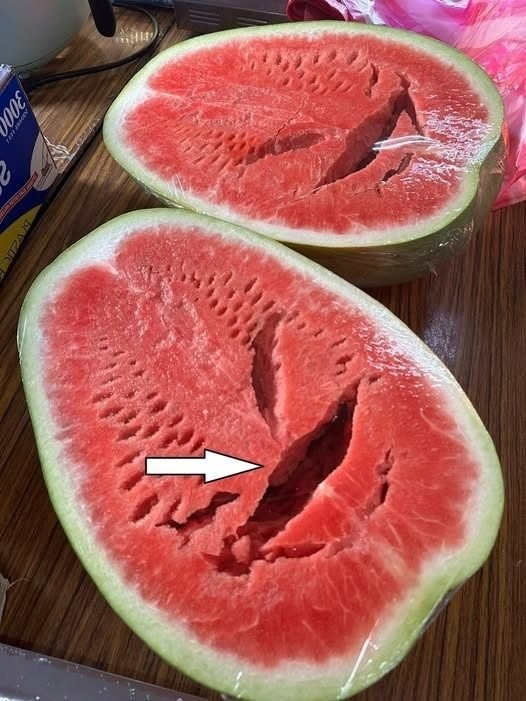
🍉 Cracked Watermelon Interior – What It Means & Why You Should Be Cautious
Finding cracks inside a watermelon — especially when the outside looks perfectly fine — can be surprising and concerning. While not every crack is dangerous, some indicate spoilage or fermentation that could make you sick.
Let’s break down what those cracks mean and when you should throw the watermelon away.
🔍 What Causes Cracks Inside a Watermelon?
1. Over-Ripeness & Internal Pressure
-
As watermelons ripen, they continue to absorb water and sugars. If left on the vine too long, internal pressure can build up, causing small to medium irregular cracks inside the flesh.
-
Verdict: Usually safe to eat if the flesh smells sweet and fresh, but texture may be mealy or grainy.
2. “Hollow Heart” (Internal Breakdown)
-
A physiological disorder where the center of the watermelon cracks or collapses, creating cavities or star-shaped cracks.
-
Cause: Poor growing conditions (uneven watering, cold temps during fruit development).
-
Verdict: Safe to eat but less appealing — texture is coarse and flavor may be bland.
3. Fermentation (The Dangerous One)
-
If the watermelon cracks are accompanied by:
-
Fizzing or bubbling
-
Sour or alcoholic smell
-
Oozing liquid
-
Off-color (brownish/yellowish) flesh
-
-
Verdict: DO NOT EAT! The fruit is fermenting internally, which can cause digestive upset, bloating, or even food poisoning symptoms.
4. Bacteria or Yeast Contamination
-
Microscopic cracks can allow bacteria or wild yeast to enter the fruit. Over time, they multiply, creating gas that forms small pockets or cracks inside.
-
Verdict: If there’s any off-smell or sliminess, discard immediately.
🛑 When to STOP Eating Immediately
| Sign | What It Means | Action |
|---|---|---|
| Fizzing or bubbles | Active fermentation | 🚫 Discard |
| Sour / alcoholic smell | Spoilage / yeast overgrowth | 🚫 Discard |
| Brown or yellow flesh near cracks | Bacterial growth | 🚫 Discard |
| Sticky, oozing liquid | Internal breakdown | 🚫 Discard |
| Mold anywhere (inside or out) | Contamination | 🚫 Discard |
| Only dry, small cracks + sweet smell | Over-ripeness / hollow heart | ✅ Safe (but may taste bland) |
✅ What to Do If Your Watermelon Has Cracks
-
Sniff test immediately — fresh watermelons smell sweet and clean.
-
Check for moisture — if the cracks are dry, the fruit is likely safe but past its prime.
-
Taste a small piece (after confirming no bad smells) — if bitter, sour, or off, spit it out and discard the rest.
-
Don’t serve to children, elderly, or immunocompromised individuals if there’s any doubt.
🧠 Prevention Tips for the Future
-
Buy smaller melons — they’re less prone to internal cracking.
-
Thump test — a ripe watermelon sounds hollow, but not dull or flat.
-
Check the field spot (yellowish area where it rested on the ground) — a creamy yellow is good; white or green means underripe.
-
Store whole watermelons at room temperature until cut, then refrigerate.
📌 The Bottom Line
Dry cracks + sweet smell = likely safe but less tasty.
Fizzing, sour smell, or oozing = throw it away immediately.
When in doubt, err on the side of caution. A $5 watermelon isn’t worth a night of food poisoning. Your nose and eyes are the best tools — if something seems wrong, it probably is.