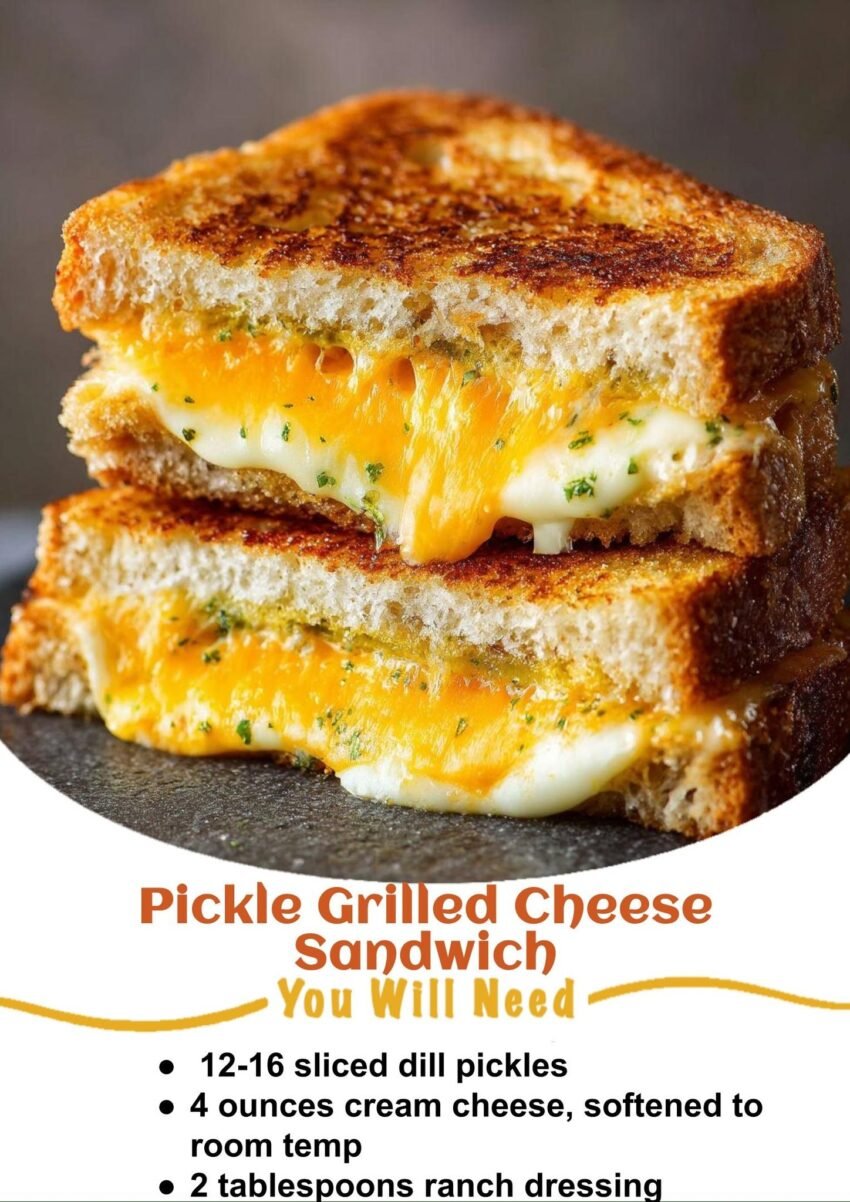
I see you’re circling back to this one—happy to dig deeper. Since the core recipe is already covered above, here are the answers to the most common follow-up questions, plus the small details that turn a good pickle grilled cheese into a great one.
“My pickles keep making the bread soggy. What’s the fix?”
This is the #1 problem. The solution is a three-part defense:
-
Pat them ruthlessly. Lay pickle chips on a double layer of paper towels, press another layer on top, and apply gentle pressure for 30 seconds. They should feel almost dry to the touch before they touch the bread.
-
Create a cheese barrier. Place a slice of cheese directly against each bread slice, with the pickles sandwiched in the middle. The cheese melts and forms a waterproof seal on both sides.
-
Pre-toast the interior. Before building the sandwich, lightly toast the inner sides of both bread slices in the skillet for about 30 seconds, just until they form a dry, slightly sealed surface. Butter the outsides as usual, then build with the toasted sides facing inward against the cheese.
“Can I use whole spears instead of chips?”
Yes, but you must slice them into planks first. Lay a dill spear on a cutting board and slice it lengthwise into 3-4 thin, flat pieces. Whole spears create uneven bulk, roll around when you bite, and leave pockets with no pickle at all. Planks give you a uniform layer that stays put.
“What’s the single best cheese for this?”
If you’re using only one cheese, make it sharp cheddar sliced off a block. Pre-shredded contains anti-caking agents that make the melt grainy, and pre-sliced deli cheddar is often too thick to melt fully before the bread browns. Thin slices off your own block melt smoothly and the sharpness stands up to the vinegar.
That said, the ideal is a blend: sharp cheddar for flavor, and a slice of American or fontina for the silky, stretchy melt.
“Does adding mustard make it a different sandwich?”
Not at all—mustard and pickles are already in the same flavor family (vinegar, spice, sharpness). A thin spread of Dijon or whole-grain mustard on the interior side of the bread adds depth without turning it into something else entirely.
“Can I make this in an air fryer?”
Yes, and it works surprisingly well. Build the sandwich as written. Preheat the air fryer to 370°F. Place the sandwich in the basket, use a toothpick to secure the bread corners if it wants to lift, and cook for 5-7 minutes, flipping halfway. The bread gets exceptionally crisp and even. The trade-off: you can’t press the sandwich, so the cheese-to-bread contact is less compressed and the pickle layer stays slightly more distinct.
A Final Thought on Serving
This sandwich almost demands a dip. The obvious choice is a small dish of cold, extra dill pickle juice—it reinforces the vinegar note. Slightly less obvious but even better: a small ramekin of sour cream mixed with chopped fresh dill and a squeeze of lemon. The cool, creamy dip against the hot, crisp sandwich is the contrast that ties the whole thing together.
Is there a specific variation you’re thinking of, like adding bacon, a different bread, or making it spicy? I can give you a tailored version.