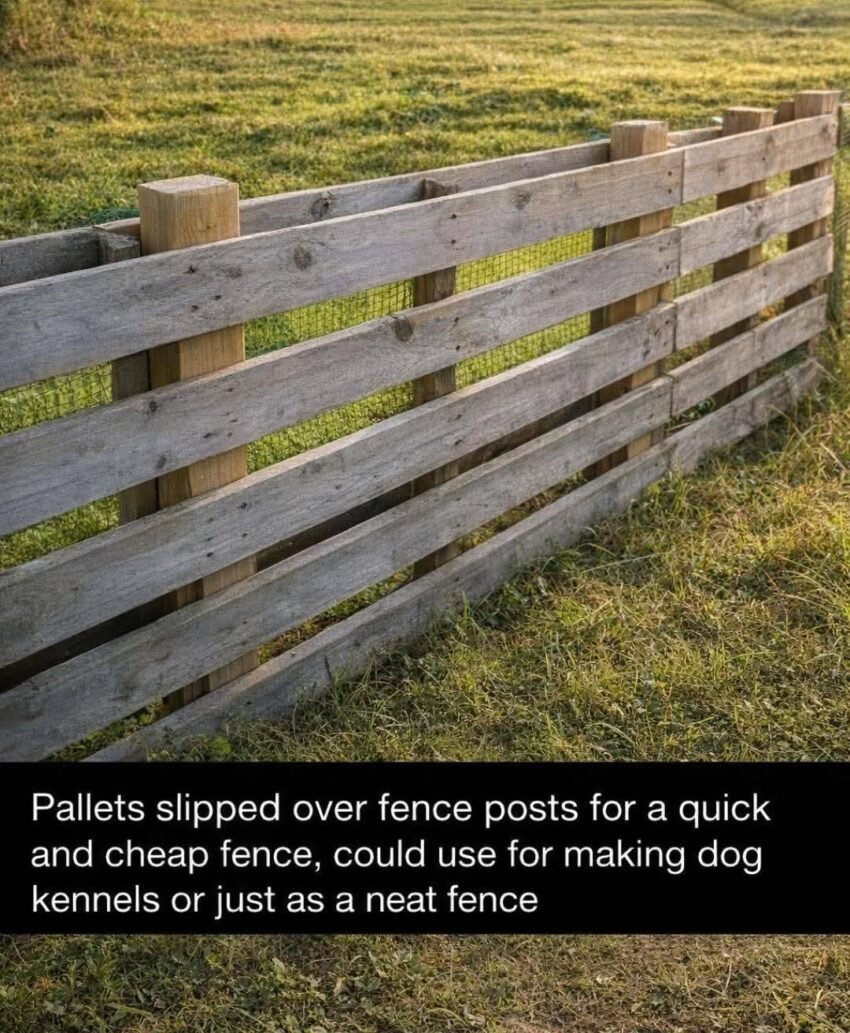
Here’s the unvarnished truth on pallet fencing, from cost to construction to getting it to last longer than a season.
Why Pallet Fencing Is Genuinely Brilliant
-
Cost: Often free or just a few dollars per pallet if you know where to look. Even with hardware, a fence that would cost thousands in cedar can be built for under $200.
-
Aesthetic: Instant rustic, reclaimed, farmhouse charm. No two pallets are identical, which gives your fence organic texture.
-
Speed: Pallets are pre-made panels. You’re essentially bolting together giant wooden tiles rather than building from individual pickets.
-
Sustainability: You’re diverting wood from landfills or burn piles.
The Catch No One Talks About
1. Not All Pallets Are Safe.
This is the single most important thing to know. Pallets are stamped with treatment codes. You must avoid pallets marked MB (Methyl Bromide)—a toxic pesticide fumigant that off-gasses. You want HT (Heat Treated) pallets only. No stamp? Don’t use it, especially near a vegetable garden, kids’ play area, or in direct sun where heat releases fumes.
2. They Rot Fast.
Pallets are usually cheap, untreated pine. Set directly on soil or exposed to sprinklers, your beautiful fence can start to warp, gray, and rot within a year. This isn’t a set-it-and-forget-it solution without significant prep.
3. They’re a Beast to Break Down.
If you plan to dismantle pallets and use the individual boards, you’re signing up for splinters, bent nails, and cracked planks. A reciprocating saw and a nail punch are your best friends. Building a fence using whole pallets is far easier.
The Build: Whole-Pallet Fence Project
What You’ll Need:
-
Heat-treated (HT) pallets, uniform size if possible
-
4×4 pressure-treated posts (your fence’s real skeleton)
-
Post hole digger and quick-set concrete
-
Exterior deck screws (2.5″ and 3″)
-
Drill/driver
-
Level
-
Weed barrier fabric and gravel (optional but highly recommended)
-
Wood sealant, outdoor stain, or linseed oil
Step 1: Plan and Prep the Pallets
Give your pallets a hard scrub with a stiff brush and soapy water. Let them dry completely in the sun. Sand down any splinter-prone surfaces roughly—you don’t need them smooth, just not flay-your-hand-open rough. Most critically, seal them now, while you can reach every slat, with a good outdoor wood sealer or a 50/50 mix of boiled linseed oil and mineral spirits. This can double the fence’s lifespan.
Step 2: Set Your Posts (The True Strength)
Pounding rebar through pallets straight into the dirt is a temporary, wobbly solution that will lean after one rainy season. For a fence that lasts, dig holes (below your frost line) every 6 to 8 feet. Set 4×4 pressure-treated posts in concrete and let them cure fully. This becomes your rigid frame; the pallets are just the infill.
Step 3: Address the Ground Contact
Wood directly on soil wicks moisture. Here’s how to fight it:
-
Dig a shallow trench along your fence line.
-
Fill it with a few inches of gravel for drainage.
-
Set a layer of weed barrier fabric down.
-
Mount your pallets so their bottom edge hovers just above the gravel, not sunk into the earth.
Step 4: Mount the Pallets
With the posts solid, screw the pallets directly into them. For continuous coverage, butt them edge-to-edge. For semi-privacy, offset a second layer of pallets over the gaps of the first. Use a level constantly—pallets can be subtly warped, and small errors compound.
Step 5: Optional Finishing Touches
-
Living wall: Staple landscape fabric to the inside, fill pallet gaps with potting soil, and plant herbs, succulents, or trailing flowers in the horizontal slots.
-
Stain: A solid exterior stain unifies mismatched wood tones and adds UV protection.
Where to Find Safe Pallets for Free (Without Dumpster Diving Blindly)
-
Hardware and feed stores: Often have uniform, clean HT pallets from bagged goods.
-
Small local builders or flooring companies: Palletized materials are often heavy but clean.
-
Equipment rental yards: Usually blue or red painted HT pallets, very sturdy.
-
Always ask. A pallet leaning against a business’s dumpster hasn’t been given to you until you hear a yes.
The Honest Verdict
Pallet fencing is not a permanent, 30-year fence. It’s a 3–7 year fence, depending on your climate and prep work. But at a fraction of the cost of even the cheapest pressure-treated picket, you can rebuild it twice and still be ahead. It’s perfect for a cottage-y garden enclosure, a temporary windbreak, or a quick privacy screen while you save for a long-term solution.
It’s hands-on, imperfect, and deeply satisfying—but the sealant and gravel drainage aren’t optional if you want to avoid a leaning, gray mess in 18 months.