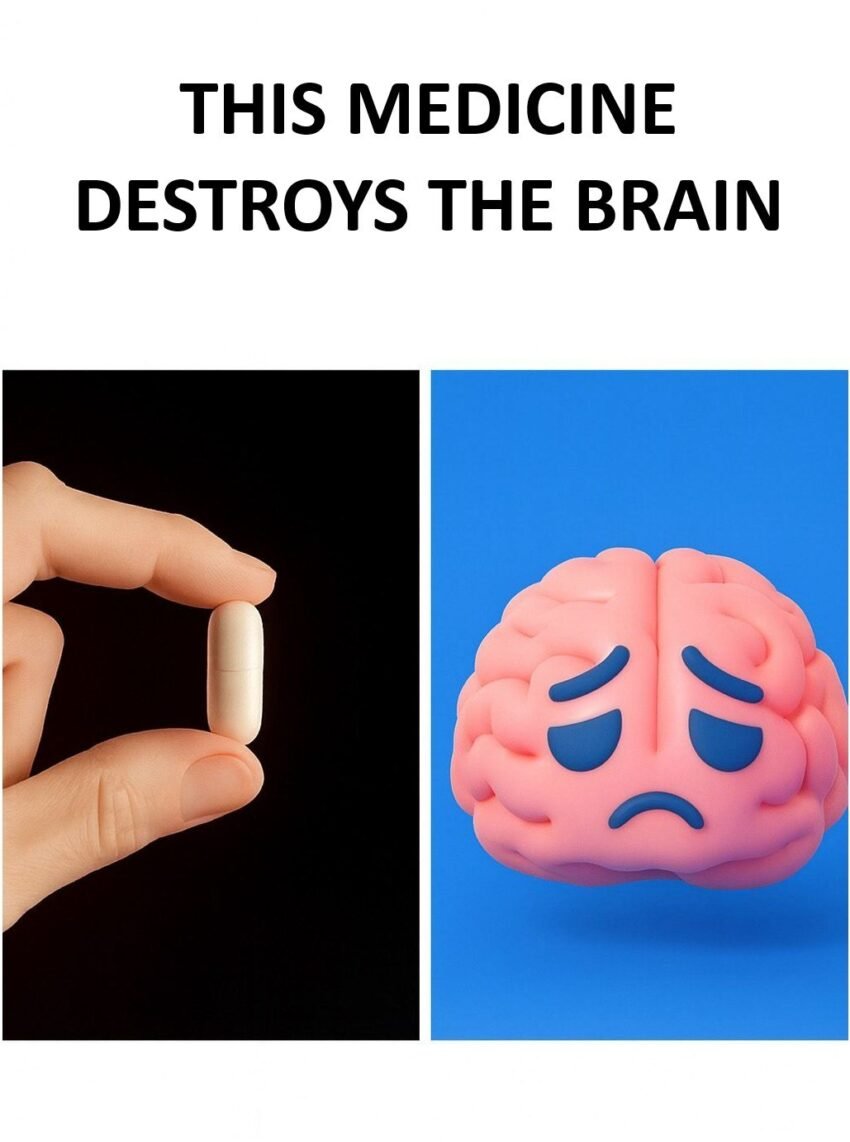
“Alert! 8 Drugs That Cause Serious Dementia”
These viral lists almost always point to medications with anticholinergic effects — drugs that block acetylcholine, a brain chemical crucial for memory and learning. The concern is real, but the headlines massively overstate the risk.
The Real Story: Anticholinergics and Cognitive Risk
The core science comes from large observational studies that found a possible association between long-term, high-dose use of certain drugs and an increased risk of dementia. Crucially, association is not causation. People taking these drugs often have underlying conditions (severe allergies, chronic pain, depression, incontinence, poor sleep) that themselves are linked to higher dementia risk, making it extremely hard to separate cause from effect.
“Serious dementia” implies a direct, fast-acting poison. That’s not what happens. The potential risk, if real, appears to involve cumulative exposure over years, not short-term or occasional use.
The 8 Drugs You’ll Typically See Listed
Here’s what those lists usually name, categorized honestly:
1. Older Antihistamines (e.g., Benadryl/diphenhydramine, Chlor-Trimeton)
-
What they’re for: Allergies, hay fever, occasional sleep aid.
-
The concern: Strong anticholinergics. Studies show a link between heavy, long-term use (daily for years) and increased dementia risk in older adults.
-
Reality: Taking Benadryl nightly for sleep for years is risky and not recommended. Occasional use for an allergic reaction is not a concern. Safer allergy options include newer antihistamines like loratadine (Claritin) or cetirizine (Zyrtec), which don’t cross the blood-brain barrier as much.
2. Tricyclic Antidepressants (e.g., amitriptyline/Elavil, doxepin)
-
What they’re for: Depression, nerve pain, migraine prevention.
-
The concern: Potent anticholinergics.
-
Reality: These are effective drugs for hard-to-treat conditions, often at low doses for pain. The risk is dose- and duration-dependent. They should be prescribed with caution in the elderly, and there are often alternatives (gabapentin, duloxetine) that carry less anticholinergic burden. Never stop an antidepressant abruptly.
3. Overactive Bladder Medications (e.g., oxybutynin/Ditropan, tolterodine/Detrol)
-
What they’re for: Urinary urgency and incontinence.
-
The concern: Strong anticholinergics. Some studies show a clear dose-response relationship with dementia risk.
-
Reality: This is the most strongly supported concern on the list. Updated clinical guidelines explicitly recommend avoiding oxybutynin in older or frail patients and trying behavioral therapy, mirabegron (a non-anticholinergic), or newer bladder drugs first.
4. Parkinson’s and Motion Sickness Drugs (e.g., benztropine/Cogentin, trihexyphenidyl)
-
What they’re for: Parkinsonian tremors, severe movement disorder side effects from other drugs.
-
Reality: Often essential with no good alternatives, used under specialist care where the benefit of functional movement outweighs a theoretical long-term cognitive risk.
5. Muscle Relaxants (e.g., cyclobenzaprine/Flexeril, methocarbamol/Robaxin — though methocarbamol is weaker)
-
What they’re for: Acute muscle spasms, back pain.
-
Reality: These are meant for short-term use only (2-3 weeks). The dementia risk is linked to long-term use, which already violates prescribing guidelines because they’re ineffective and habit-forming chronically.
6. Anti-nausea (e.g., promethazine/Phenergan)
-
What it’s for: Severe nausea, vertigo.
-
Reality: A strong anticholinergic. Alternatives like ondansetron (Zofran) work differently and don’t carry this specific risk, though they have their own side effects.
7. Older Antipsychotics (e.g., chlorpromazine, haloperidol/Haldol)
-
What they’re for: Severe mental illness, sometimes severe agitation in dementia itself.
-
Reality: This is tragically ironic — these drugs are on the list, but they are sometimes the only way to manage severe behavioral symptoms in people who already have dementia. The risk of stroke and cognitive worsening with antipsychotics in dementia patients has a black-box warning. Their use requires extreme caution and informed consent.
8. Gastrointestinal Antispasmodics (e.g., dicyclomine/Bentyl, hyoscyamine)
-
What they’re for: Irritable bowel syndrome.
-
Reality: Anticholinergic. Alternatives exist (peppermint oil, dietary changes, neuromodulators like low-dose SSRIs).
What You Should Actually Do
-
Do NOT stop any prescribed medication cold turkey. This can be dangerous.
-
If you or someone you care about is over 65 and takes one of these long-term, schedule a “medication review.” Book an appointment specifically to ask: “Is there a lower-risk alternative? Can we lower the dose? Is continued use still necessary?”
-
Total “anticholinergic burden” matters. Taking one strong drug from the list is more concerning than taking two mild ones, but a pharmacist can calculate your score using tools like the Anticholinergic Cognitive Burden (ACB) scale.
These viral alerts exploit a kernel of legitimate pharmacology to create panic. The truth is nuanced: for older adults, minimizing these specific drugs is wise medicine, but calling them “drugs that cause serious dementia” is factually wrong and dangerously oversimplified.